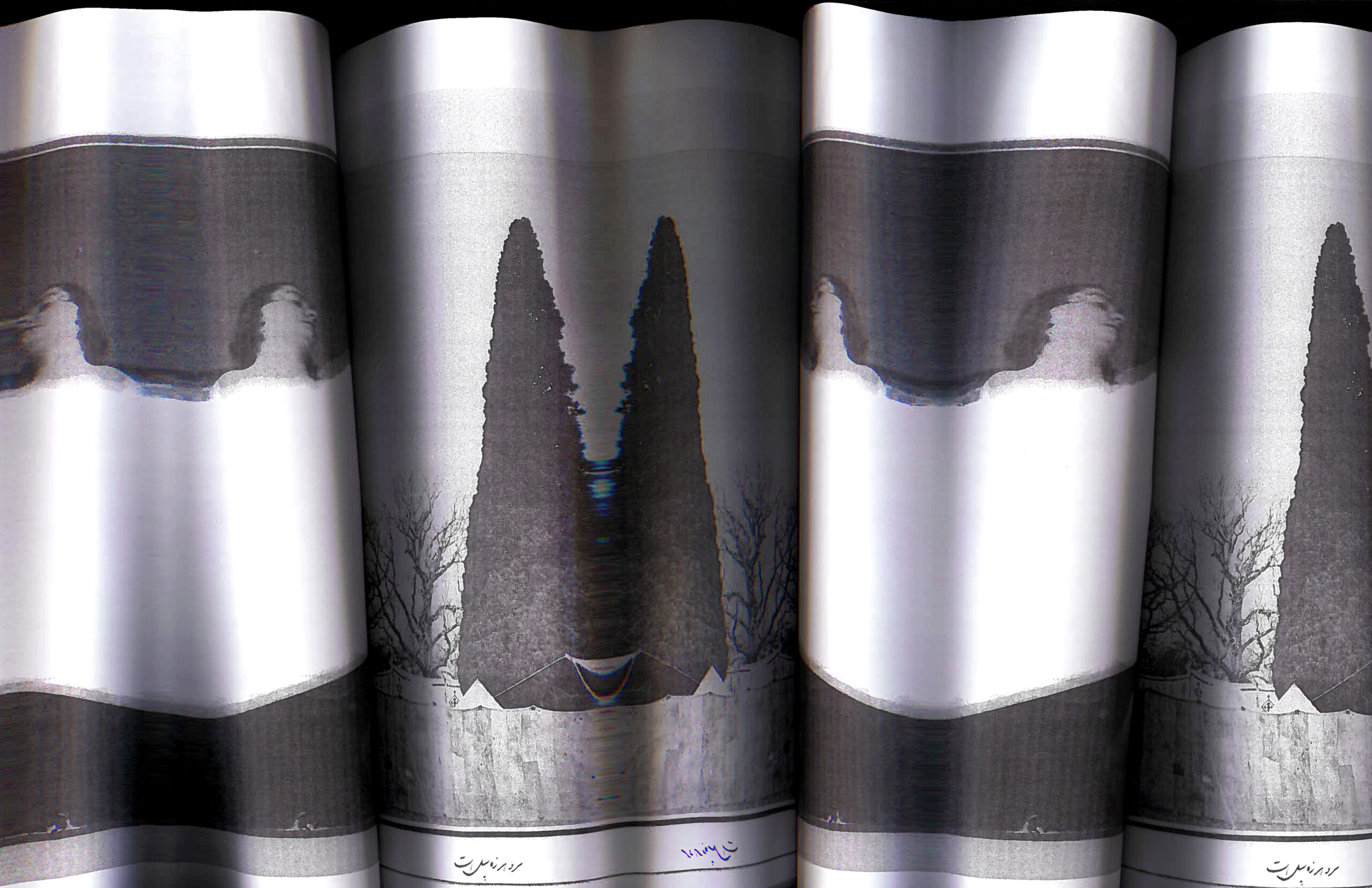
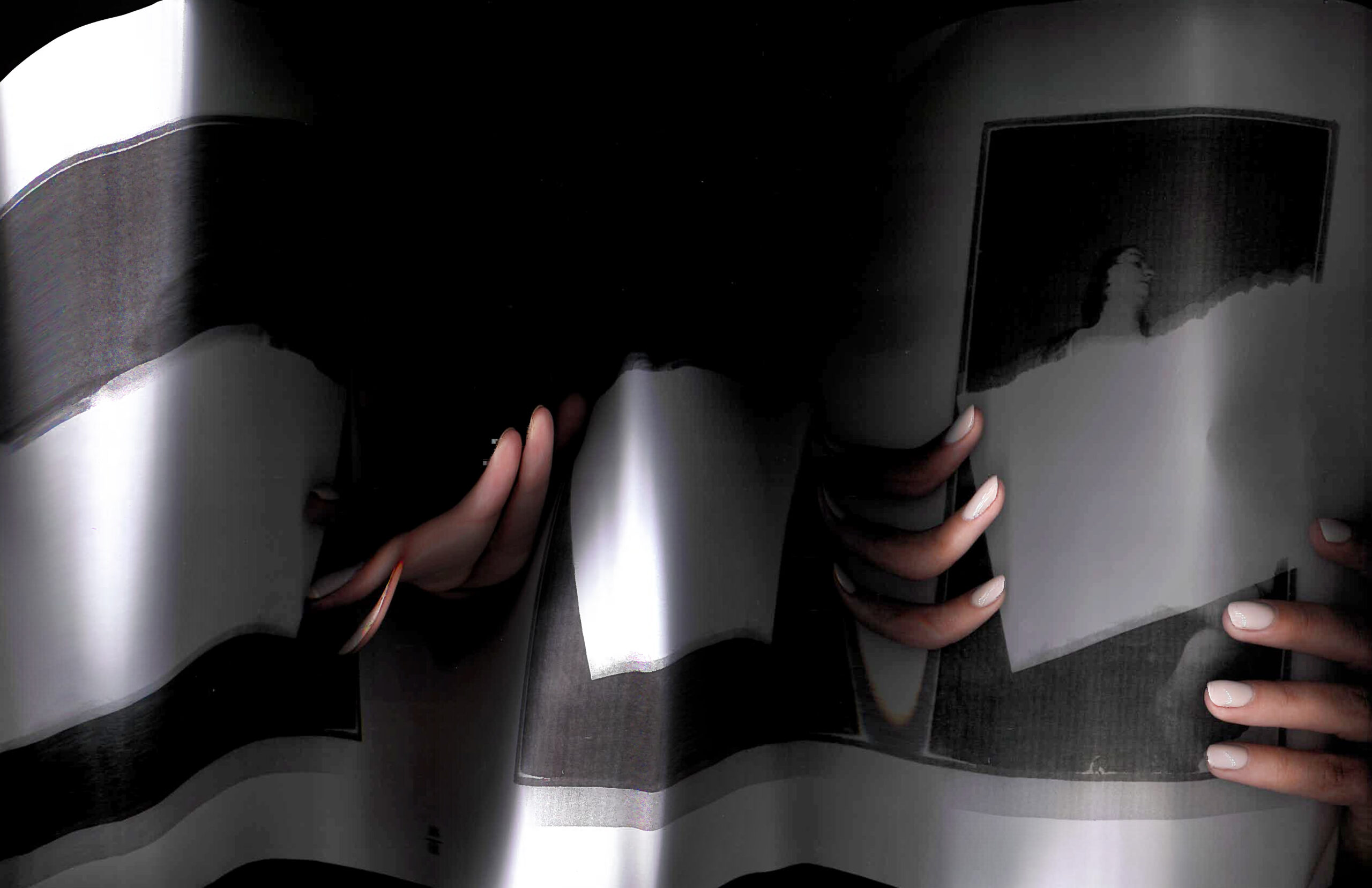
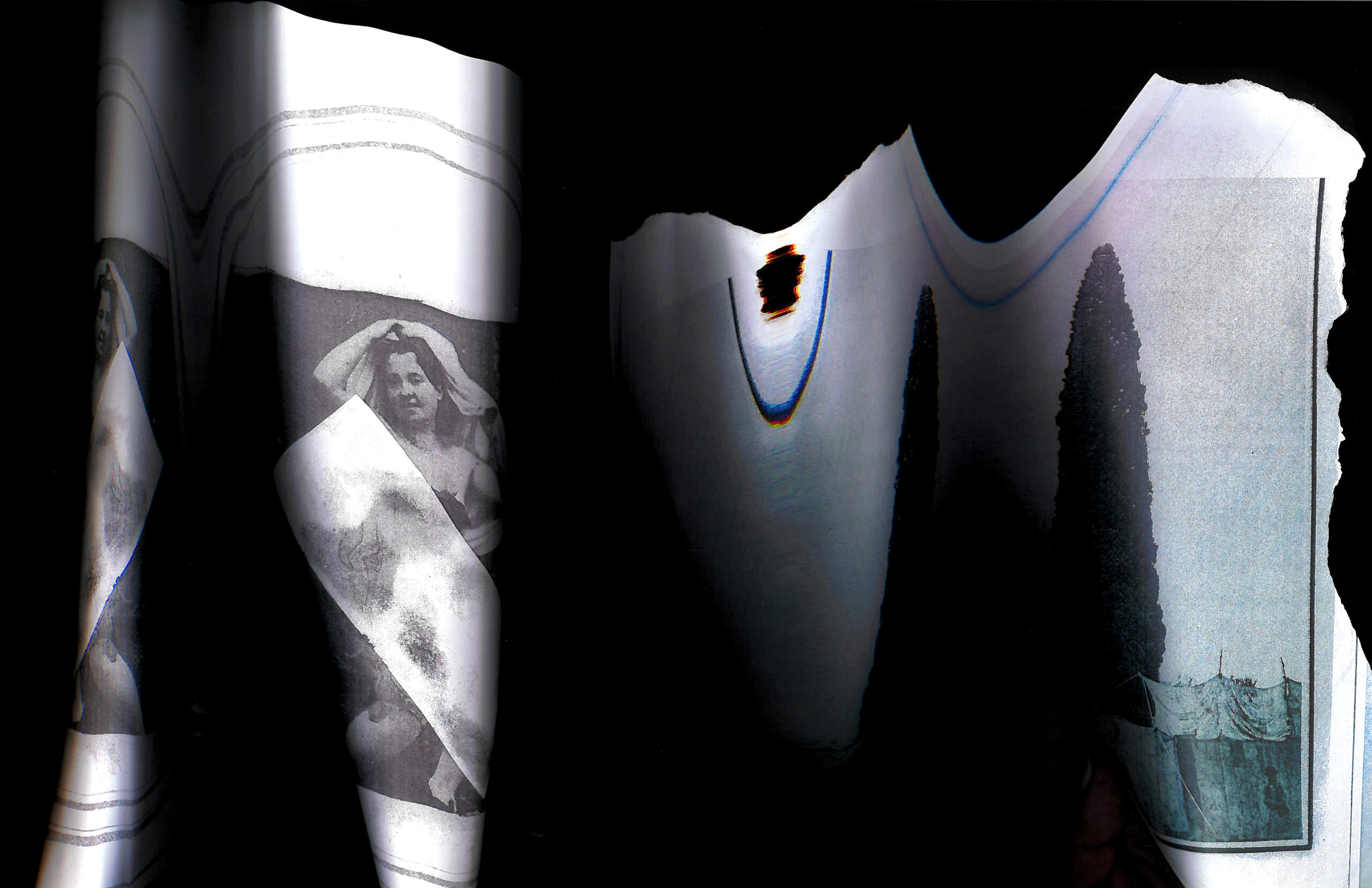
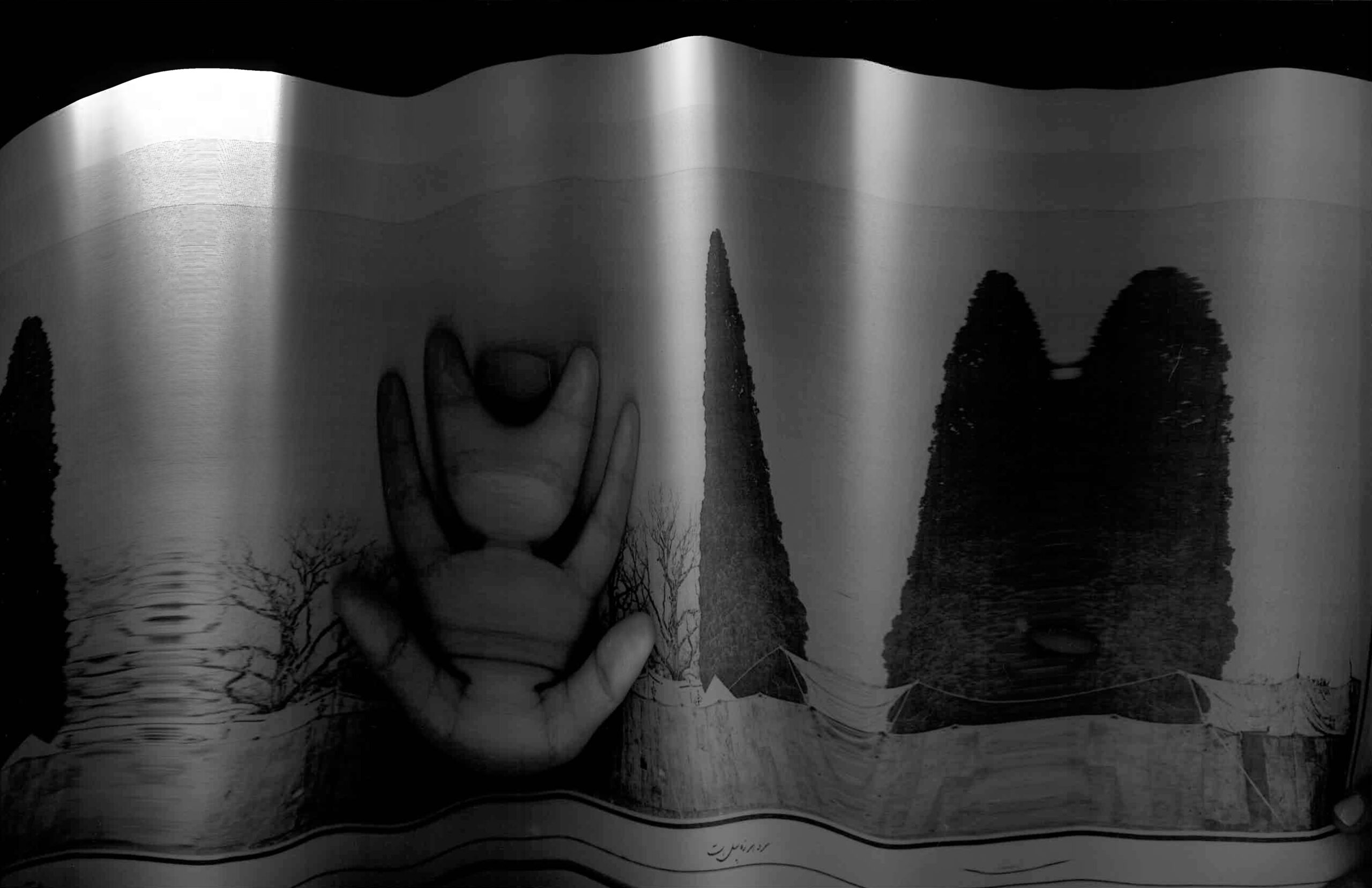
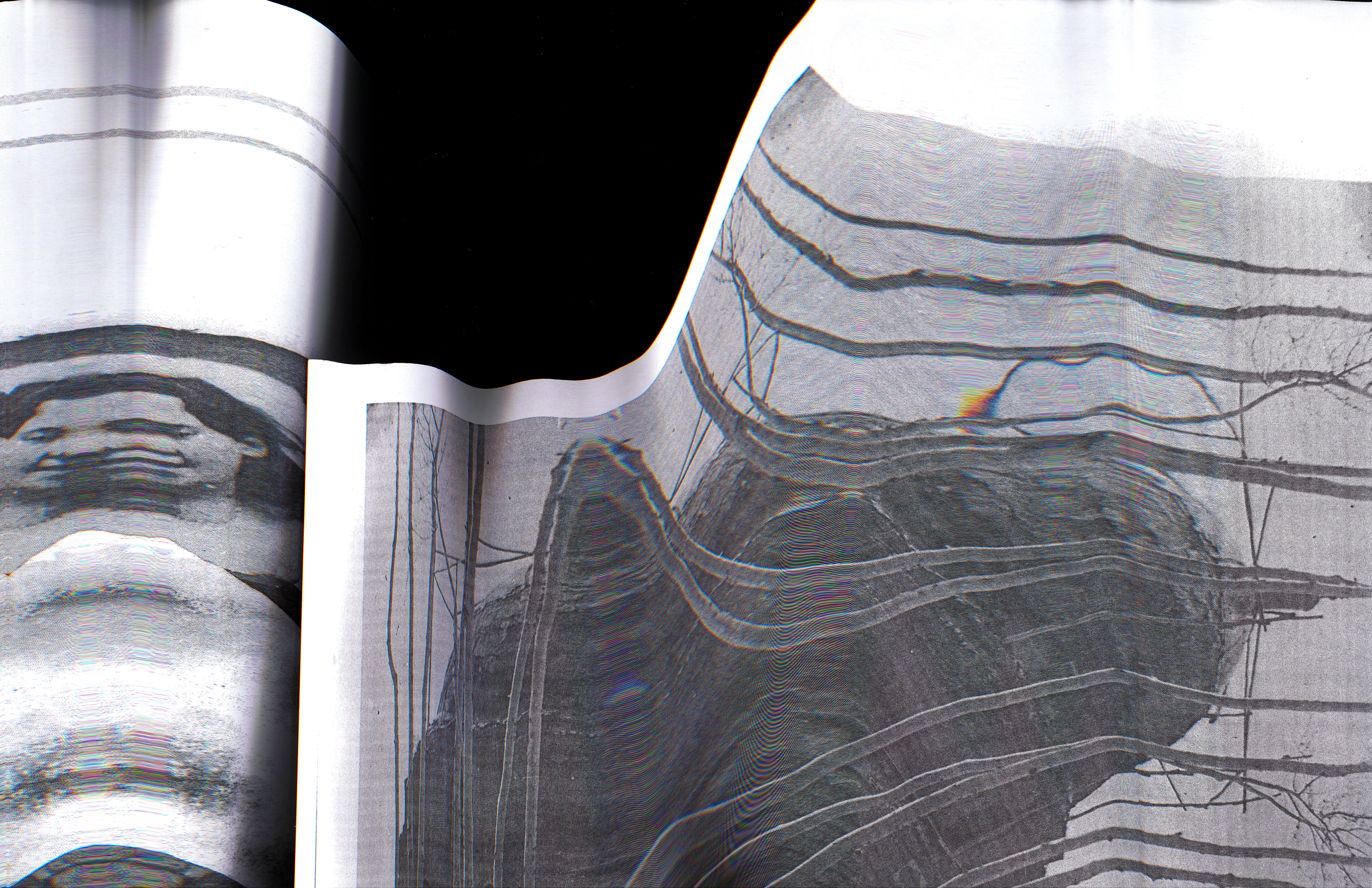
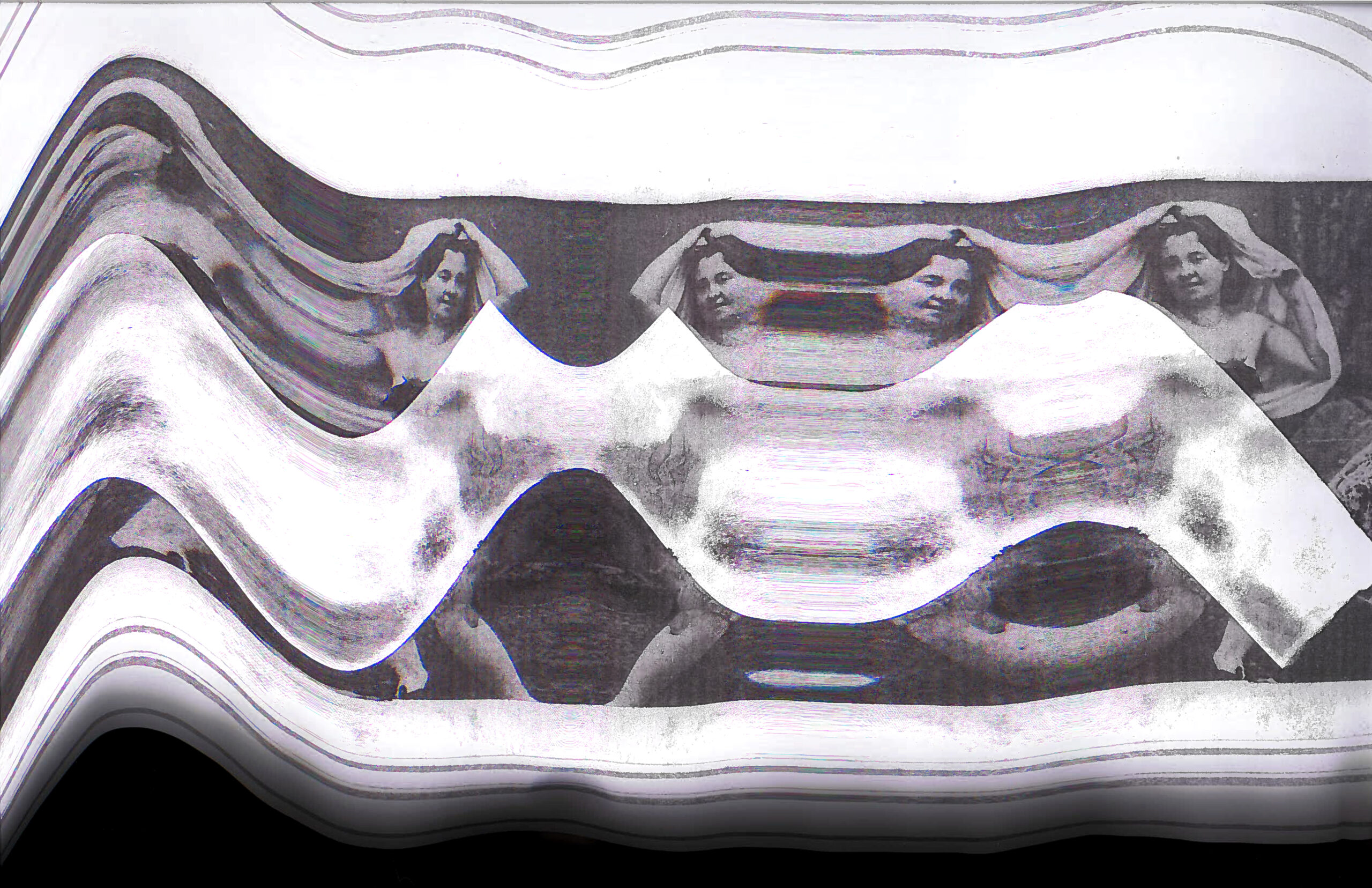
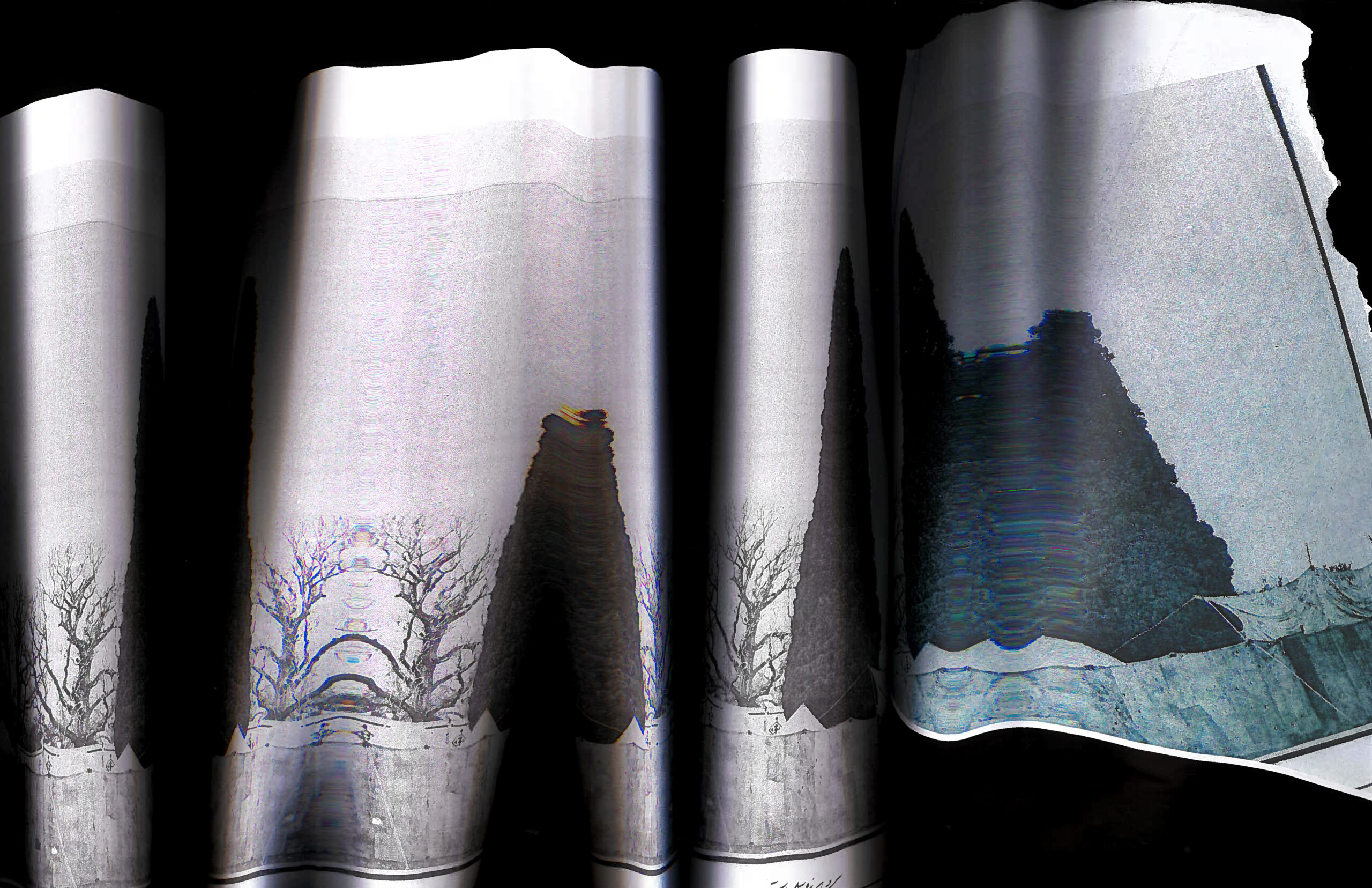
In 2023, an anonymous source released online a hidden archive of photographs from 200 years ago in Iran, kept from the public until then. This collection came from the Department of Photography in the palace of Naser al-Din Shah Qajar, the king of Iran. The palace contained two darkrooms: one dedicated to photographing people, ceremonies, and architecture, and another private darkroom belonging to the Shah himself, where he photographed his 84 wives in the secluded section of the palace.
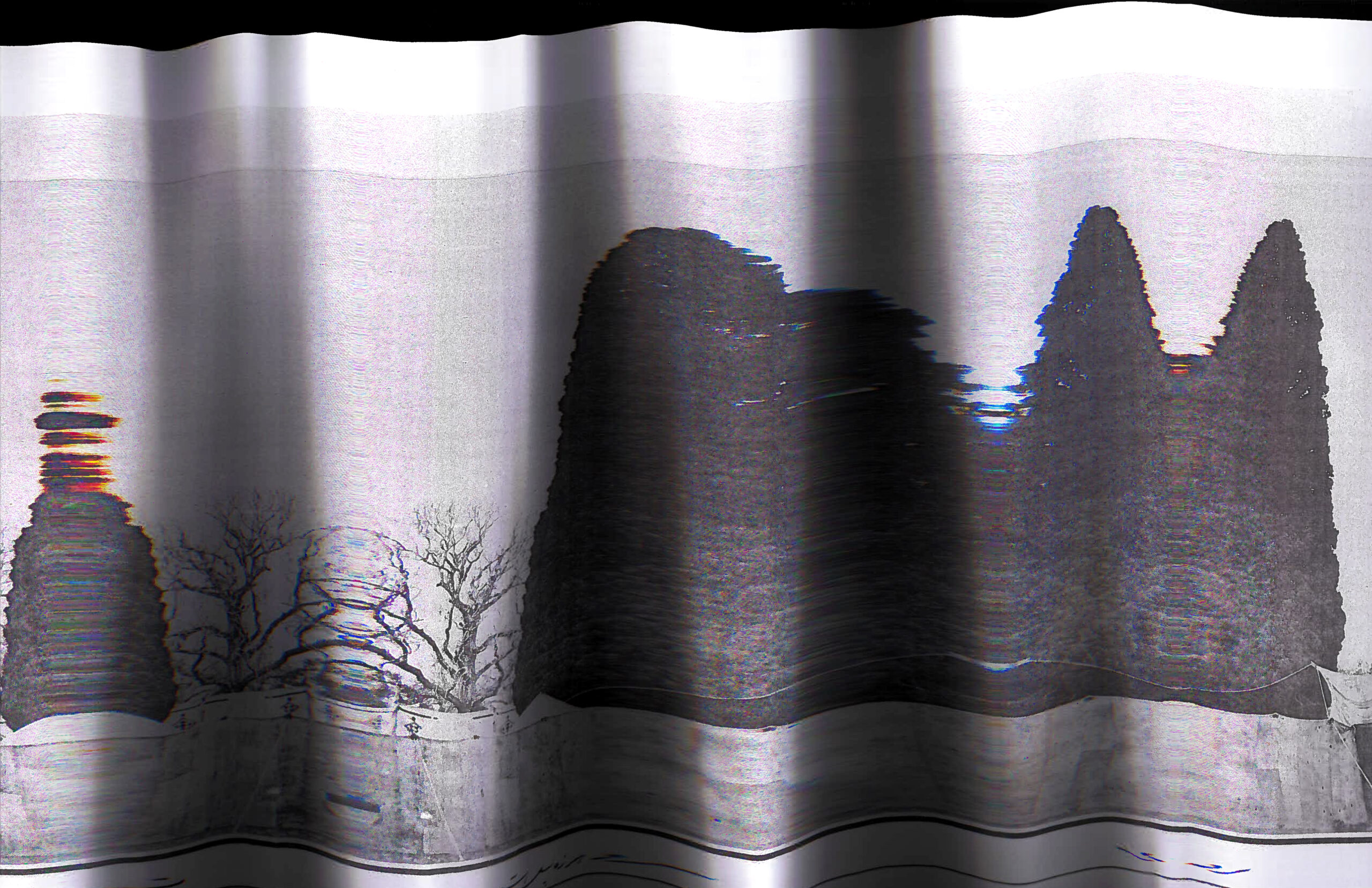
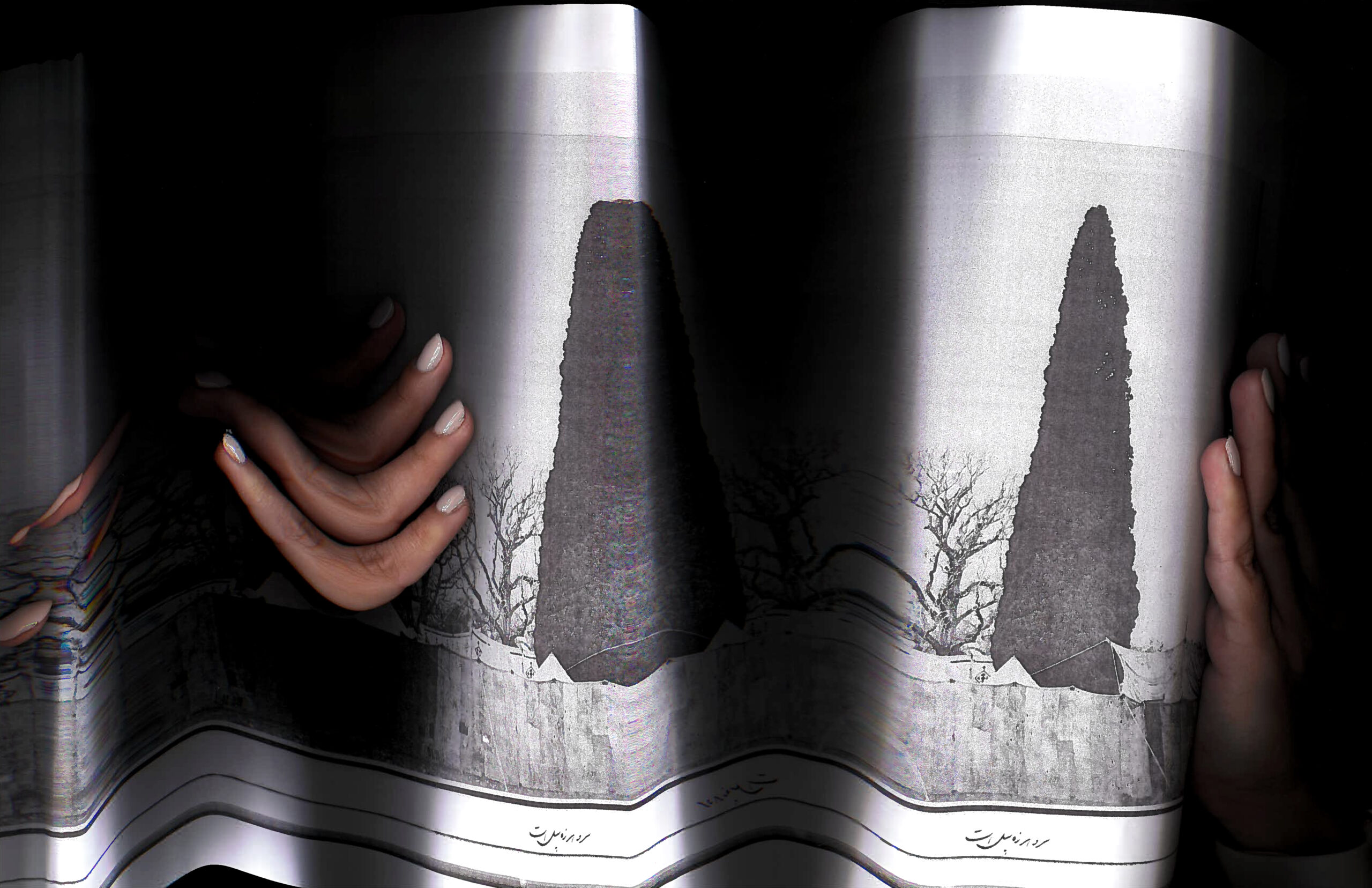
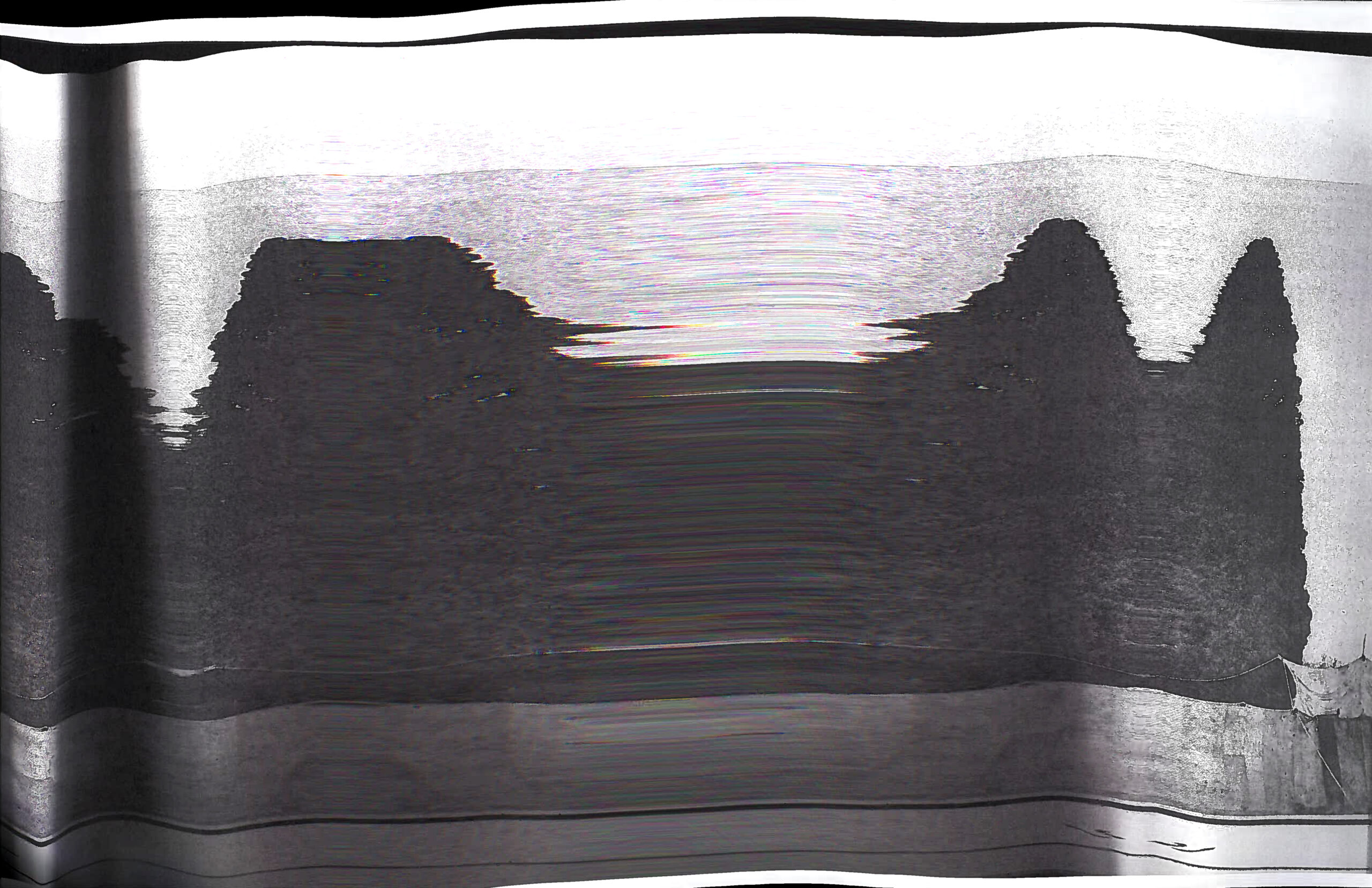
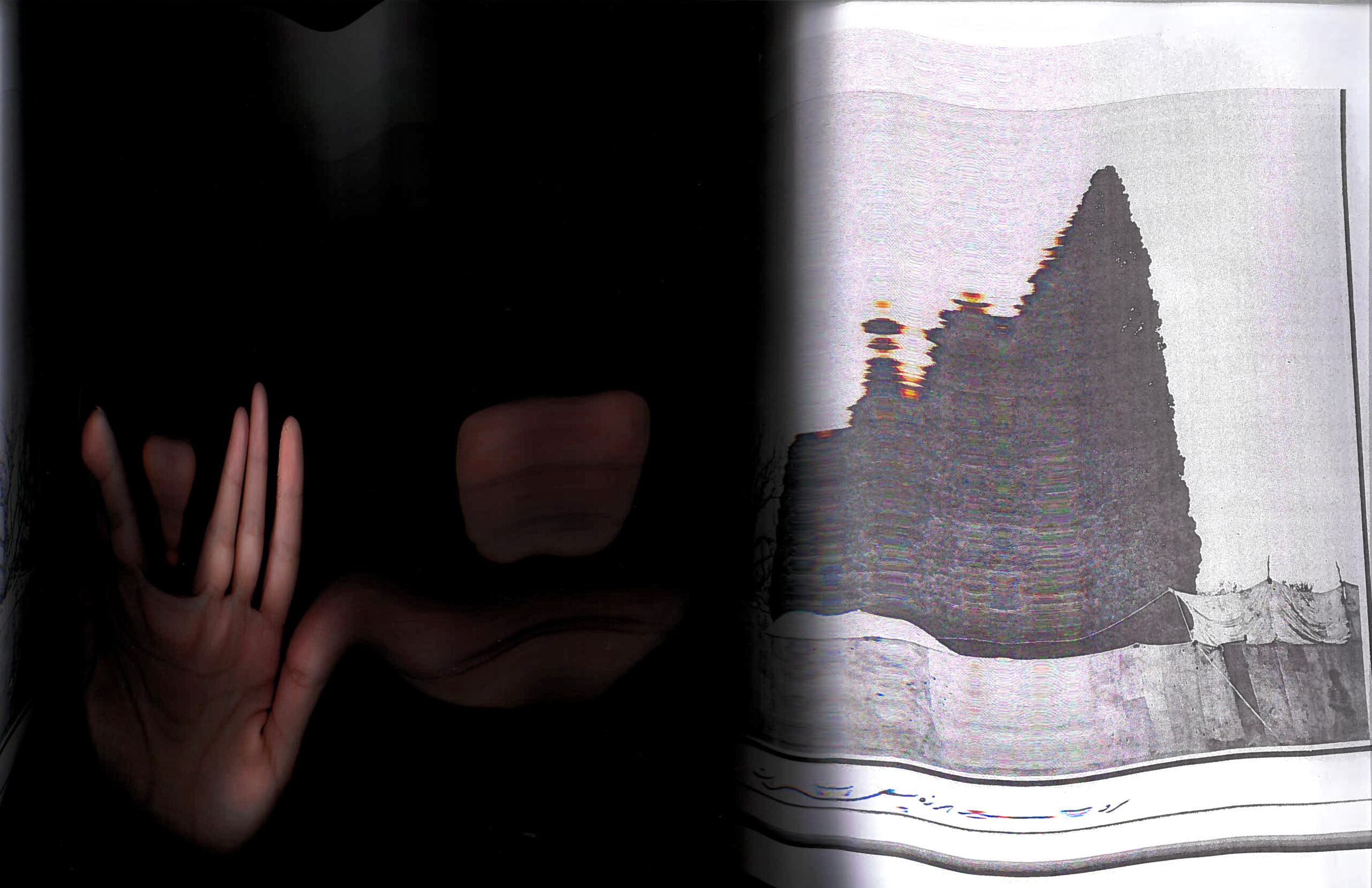
This discovery was deeply significant for me, offering a rare opportunity to explore the history and lived experiences of women in my country through visual documentation. Among the images were several censored photographs of female bodies, which I found strikingly reminiscent of another photograph in the collection—an image of a tree enclosed behind a fence.
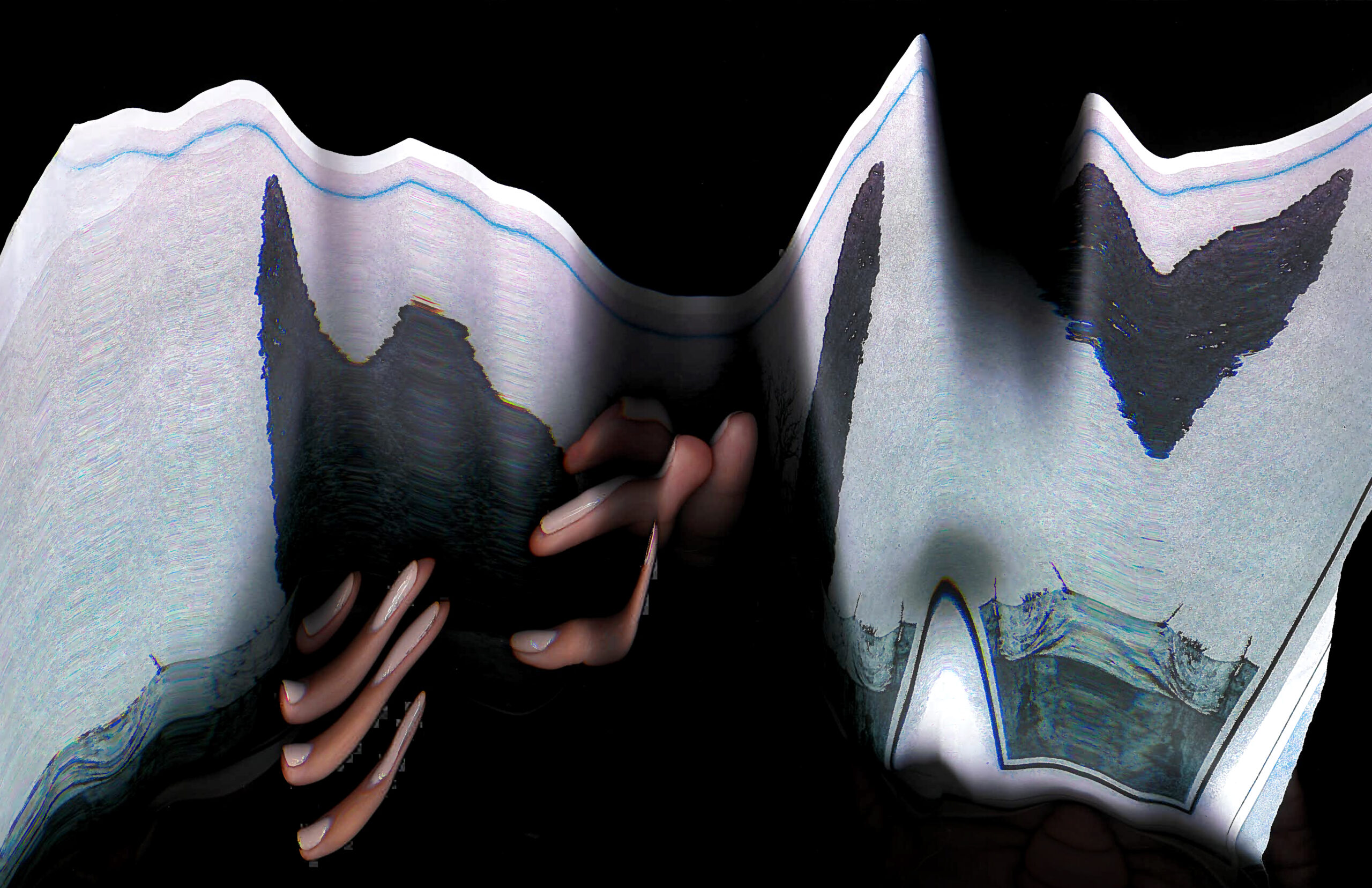
In response, I used a photocopy machine, transforming it from a tool of replication into an instrument of resistance. Through deliberate manipulation, I sought to challenge a reality that, in my view, still persists: women, even today, remain metaphorically—and at times literally—behind fences.
This project became a meditation on resistance, revealing how archives and history more broadly attempt to capture, define, and fix women’s identities, both past and present.